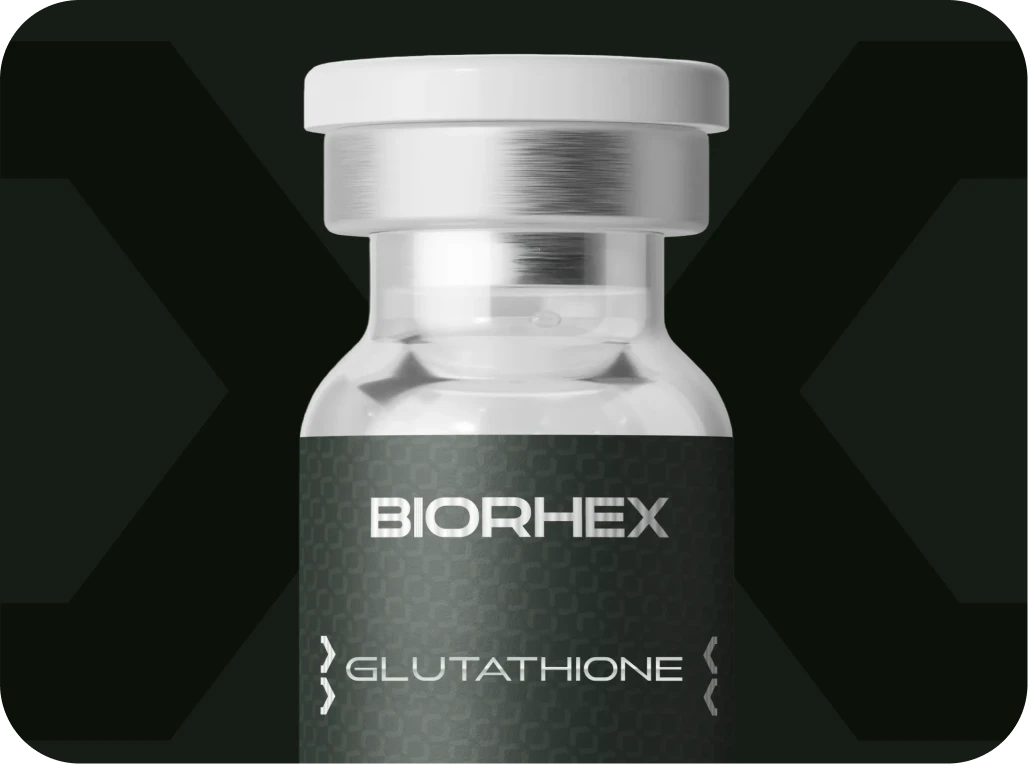
Glutathione
$79.00
- In stock
- COA-verified
- ≥99% purity.
- USA manufactured.
- In stock
- COA-verified
- ≥99% purity.
- USA manufactured.
- COA-verified
- In stock
- ≥99% purity.
- USA manufactured.
- In stock
- ≥99% purity.
- USA manufactured.
- In stock
- ≥99% purity.
- USA manufactured.
- In stock
- ≥99% purity.
- USA manufactured.
WHAT IS GLUTATHIONE?
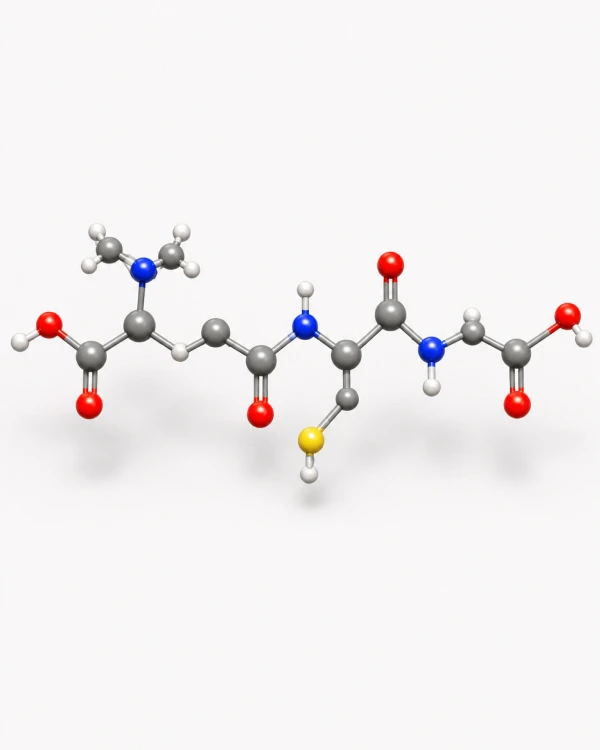
Glutathione (GSH) is a tripeptide composed of glutamate, cysteine, and glycine, joined through an atypical γ-peptide bond. It is the most abundant low-molecular-weight thiol synthesized in cells and functions as a central component of the cellular antioxidant system in research models.
BioRhex supplies Glutathione as a research compound manufactured in a GMP-compliant US facility, tested to ≥ 99% purity via HPLC and mass spectrometry, and supplied strictly for controlled laboratory research — not for human or animal use.
Compound Overview
Glutathione is a tripeptide investigated for its interactions with redox-active signaling systems and thiol-based cellular defense pathways. In vitro and preclinical models examine how glutathione may influence:
• Reactive oxygen species (ROS) neutralization in cellular models
• Redox homeostasis and GSH/GSSG ratio dynamics
• Protein S-glutathionylation and post-translational signaling
• Detoxification of electrophilic and xenobiotic compounds
• Mitochondrial oxidative-stress response pathways
All findings referenced are from controlled research environments and do not represent clinical outcomes or therapeutic claims.
HISTORY OF GLUTATHIONE
Glutathione was first identified in the late 19th century and characterized structurally in the 1920s by Frederick Gowland Hopkins, who established its tripeptide composition. It became one of the earliest low-molecular-weight thiols studied in biochemical research.
In vitro and preclinical findings related to glutathione’s role in redox regulation and oxidative-stress response expanded its use as a reference compound in cellular antioxidant and detoxification research.
Glutathione continues to be investigated within redox biology and cellular homeostasis pathway research in controlled laboratory environments.
Structure
Reserch-grade coenzyme compound visualization.
COMPOUND
-Glu-Cys-Gly
TYPE
Tripeptide (thiol antioxidant)
MOLECULAR FORMULA
C10H17N3O6S
MOLECULAR WEIGHT
307.32 g/mol
PURITY
≥99%
ANALYSIS
HPLC Verified
STORAGE
Store at -20°C. Protect from light and moisture.
CLASSIFICATION
Reserch Use Only
Research Findings
Published and preclinical research on Glutathione covers several areas of scientific investigation, including:
Oxidative stress research: Studies examine glutathione’s interactions with reactive oxygen species and lipid peroxidation in experimental models.
Signaling pathway research: Studies examine protein S-glutathionylation as a reversible post-translational regulatory mechanism.
Detoxification research: Studies examine glutathione conjugation in the elimination of electrophilic and xenobiotic compounds in cellular models.
Redox biology research: Studies examine glutathione’s role in maintaining the GSH/GSSG ratio and cellular redox potential in in vitro systems.
All findings referenced are from controlled, non-clinical research models and do not imply therapeutic or clinical application.
References
1. Forman HJ, Zhang H, Rinna A (2009). Glutathione: overview of its protective roles, measurement, and biosynthesis. Molecular Aspects of Medicine, 30(1–2), 1–12. https://doi.org/10.1016/j.mam.2008.08.006
2. Aquilano K, Baldelli S, Ciriolo MR (2014). Glutathione: new roles in redox signaling for an old antioxidant. Frontiers in Pharmacology, 5, 196. https://doi.org/10.3389/fphar.2014.00196
3. Lushchak VI (2012). Glutathione homeostasis and functions: potential targets for medical interventions. Journal of Amino Acids, 2012, 736837. https://doi.org/10.1155/2012/736837
4. Chai YC, Mieyal JJ (2023). Glutathione and glutaredoxin — key players in cellular redox homeostasis and signaling. Antioxidants, 12(8), 1553. https://doi.org/10.3390/antiox12081553
FAQ
What type of research is Glutathione used for?
Glutathione is used in laboratory research settings. All supplied compounds are intended strictly for in vitro and preclinical research purposes. Use is limited to controlled scientific environments.
Where is BioRhex’s Glutathione manufactured?
All BioRhex compounds, including Glutathione, are manufactured in a GMP-compliant facility located in the United States.
What testing does BioRhex conduct on Glutathione?
Every batch of Glutathione undergoes third-party HPLC purity testing, mass spectrometry identity verification, and sterility testing. A Certificate of Analysis is included with every order, documenting batch-specific purity data at a ≥ 99% threshold.
Is Glutathione approved for human use?
No. Glutathione is not FDA-approved and is not intended for human or animal administration. It is supplied exclusively for laboratory research purposes.
Who should handle this compound?
Only qualified personnel in controlled laboratory settings following appropriate safety and handling protocols.
Research Use Only
All BioRhex compounds are supplied strictly for laboratory research purposes. Not for human or animal consumption, medical use, or therapeutic application. Glutathione is not FDA-approved for any medical purpose. Nothing on this page should be interpreted as health guidance or applied outside controlled research settings.