Pinealon
$49.00
- In stock
- COA-verified
- ≥99% purity.
- USA manufactured.
- In stock
- COA-verified
- ≥99% purity.
- USA manufactured.
- COA-verified
- In stock
- ≥99% purity.
- USA manufactured.
- In stock
- ≥99% purity.
- USA manufactured.
- In stock
- ≥99% purity.
- USA manufactured.
- In stock
- ≥99% purity.
- USA manufactured.
WHAT IS PINEALON?
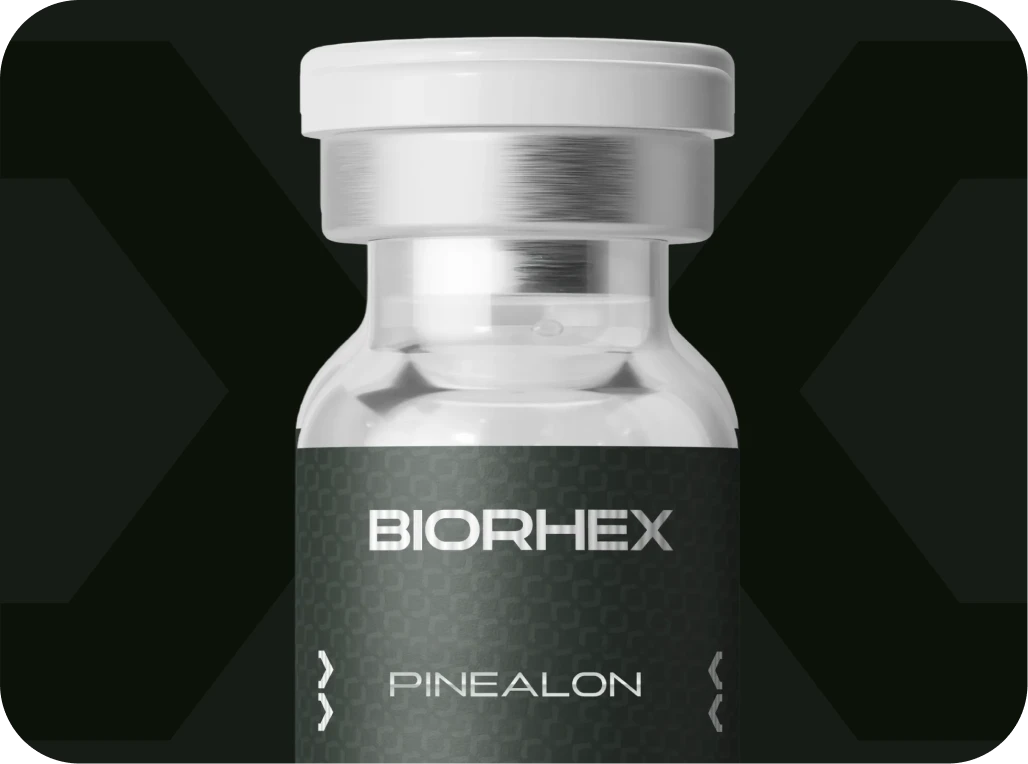
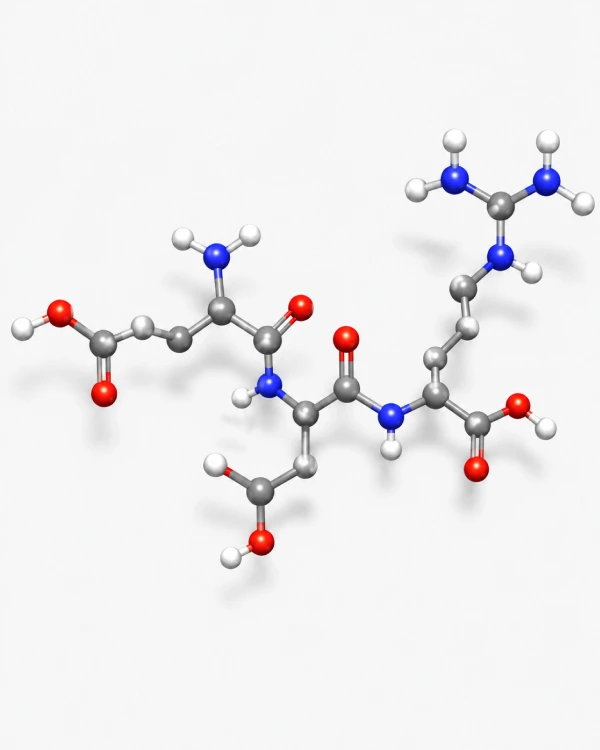
Pinealon is a synthetic tripeptide composed of glutamic acid, aspartic acid, and arginine (Glu-Asp-Arg). It belongs to the class of short peptide bioregulators developed at the St. Petersburg Institute of Bioregulation and Gerontology and is investigated for its proposed interactions with DNA and neuronal gene expression in research models.
BioRhex supplies Pinealon as a research compound manufactured in a GMP-compliant US facility, tested to ≥ 99% purity via HPLC and mass spectrometry, and supplied strictly for controlled laboratory research — not for human or animal use.
Compound Overview
Pinealon is a tripeptide investigated for its interactions with neuronal signaling and gene-expression pathways. In vitro and preclinical models examine how Pinealon may influence:
Reactive oxygen species (ROS) accumulation in neuronal cell models
Sequence-specific peptide–DNA interactions and gene expression
Anti-apoptotic and cell-viability signaling
ERK 1/2 pathway modulation and cell-cycle dynamics
Neuroprotective response under hypoxic and oxidative conditions
HISTORY OF PINEALON
Pinealon was developed by Vladimir Khavinson and colleagues at the St. Petersburg Institute of Bioregulation and Gerontology as a synthetic tripeptide within the broader program of short peptide bioregulators. It shares the Khavinson design lineage with related peptides such as Epitalon.
In vitro and preclinical findings related to Pinealon’s interactions with reactive oxygen species and neuronal gene expression expanded its use as a research tool in neuroprotection and cellular-aging studies.
Pinealon continues to be investigated within neuroprotective and gene-regulatory pathway research in controlled laboratory environments.
Structure
Reserch-grade coenzyme compound visualization.
COMPOUND
Glu-Asp-Arg(EDR)
TYPE
Tripeptide bioregulator (cytogen)
MOLECULAR FORMULA
C15H26N6O8
MOLECULAR WEIGHT
418.40 g/mol
PURITY
≥99%
ANALYSIS
HPLC Verified
STORAGE
Store at -20°C. Protect from light and moisture.
CLASSIFICATION
Reserch Use Only
Research Findings
Published and preclinical research on Pinealon covers several areas of scientific investigation, including:
Neuroprotection research: Studies examine Pinealon’s interactions with reactive oxygen species and necrotic cell death in cerebellar and neuronal cell cultures.
Gene expression research: Studies examine Pinealon’s proposed sequence-specific interactions with DNA and modulation of neuronal gene transcription.
Cellular aging research: Studies examine Pinealon’s associations with cell viability and proliferative processes.
Oxidative stress research: Studies examine Pinealon’s effects under receptor-dependent and receptor-independent oxidative-stress conditions in preclinical models.
All findings referenced are from controlled, non-clinical research models and do not imply therapeutic or clinical application.
References
1. Khavinson V, Ribakova Y, Kulebiakin K, et al. (2011). Pinealon increases cell viability by suppression of free radical levels and activating proliferative processes. Rejuvenation Research, 14(5), 535–541. https://doi.org/10.1089/rej.2011.1172
2. Fedoreyeva LI, Kireev II, Khavinson VKh, Vanyushin BF (2011). Penetration of short fluorescence-labeled peptides into the nucleus in HeLa cells and in vitro specific interaction of the peptides with deoxyribooligonucleotides and DNA. Biochemistry (Moscow), 76(11), 1210–1219. https://doi.org/10.1134/S0006297911110022
3. Khavinson V, Linkova N, Kozhevnikova E, et al. (2021). EDR peptide: possible mechanism of gene expression and protein synthesis regulation involved in the pathogenesis of Alzheimer’s disease. Molecules, 26(1), 159. https://doi.org/10.3390/molecules26010159
4. Khavinson V, Ilina A, Kraskovskaya N, et al. (2021). Neuroprotective effects of tripeptides — epigenetic regulators in a mouse model of Alzheimer’s disease. Pharmaceuticals, 14(6), 515. https://doi.org/10.3390/ph14060515
FAQ
What type of research is Pinealon used for?
Pinealon is used in laboratory research settings. All supplied compounds are intended strictly for in vitro and preclinical research purposes. Use is limited to controlled scientific environments.
Where is BioRhex’s Pinealon manufactured?
All BioRhex compounds, including Pinealon, are manufactured in a GMP-compliant facility located in the United States.
What testing does BioRhex conduct on Pinealon?
Every batch of Pinealon undergoes third-party HPLC purity testing, mass spectrometry identity verification, and sterility testing. A Certificate of Analysis is included with every order, documenting batch-specific purity data at a ≥ 99% threshold.
Is Pinealon approved for human use?
No. Pinealon is not FDA-approved and is not intended for human or animal administration. It is supplied exclusively for laboratory research purposes.
Who should handle this compound?
Only qualified personnel in controlled laboratory settings following appropriate safety and handling protocols.
Research Use Only
All BioRhex compounds are supplied strictly for laboratory research purposes. Not for human or animal consumption, medical use, or therapeutic application. Pinealon is not FDA-approved for any medical purpose. Nothing on this page should be interpreted as health guidance or applied outside controlled research settings.