Sleep & Recovery Research Stack
$219.00
- In stock
- COA-verified
- ≥99% purity.
- USA manufactured.
- In stock
- COA-verified
- ≥99% purity.
- USA manufactured.
- COA-verified
- In stock
- ≥99% purity.
- USA manufactured.
- In stock
- ≥99% purity.
- USA manufactured.
- In stock
- ≥99% purity.
- USA manufactured.
- In stock
- ≥99% purity.
- USA manufactured.
What Is Sleep & Recovery Research Stack
A laboratory stack for studying sleep architecture, neuroendocrine stress response, circadian regulation, pineal signaling, cellular aging markers, and short-peptide bioregulation.
METABOLIC RESEARCH STACK
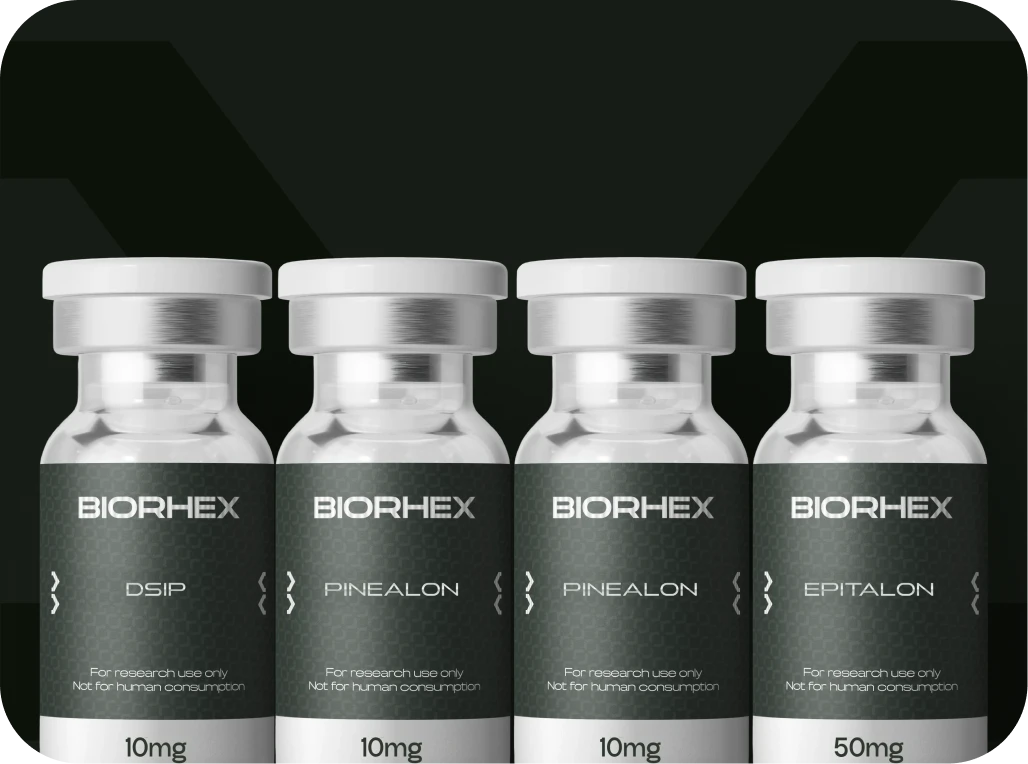
COMPONENT
DSIP
Pinealon
Epitalon
QUANTITY
10mg
10mg × 2
50mg
RESEARCH CLASS
delta sleep-inducing peptide research
short bioregulatory peptide research
tetrapeptide and circadian-aging research
Compound Overview
The Sleep & Recovery Research Stack combines DSIP, Pinealon, and Epitalon. DSIP is a nonapeptide historically investigated in sleep physiology, neuroendocrine regulation, and stress models, although published findings have been variable. Pinealon is a short peptide bioregulator studied mainly in experimental neurobiology and gene-expression contexts. Epitalon is a synthetic tetrapeptide based on epithalamic peptide research and has been investigated in circadian, pineal, telomerase, and aging-related experimental models.
The compounds have distinct sequences and research histories. Published evidence is heterogeneous, and no therapeutic outcome is implied.
Sleep architecture and slow-wave sleep experimental models
Neuroendocrine stress-response and autonomic regulation research
Pineal, melatonin-associated, and circadian pathway investigation
Short-peptide regulation of gene expression in neural models
Telomerase, cellular senescence, and aging-biology research
BACKGROUND & HISTORY
DSIP was isolated in the 1970s during experiments on sleep-related peptide activity and became the subject of human and animal sleep studies with mixed results. Pinealon and Epitalon arose from peptide bioregulator programs examining short peptides derived from tissue extracts. Epitalon, a tetrapeptide analog, has been studied in relation to pineal function, circadian biology, and cellular aging markers.
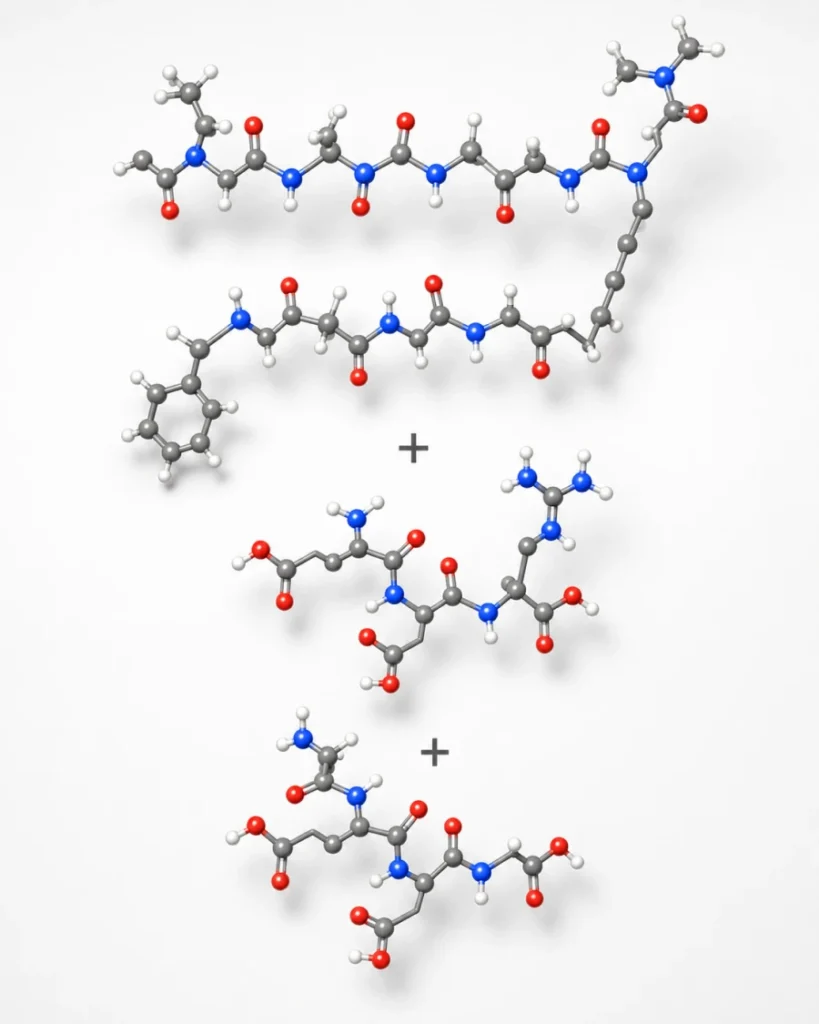
Structure
Reserch-grade coenzyme compound visualization.
COMPOUND
DSIP + Pinealon + Epitalon
TYPE
Multi-component sleep, circadian, and bioregulation research stack
MOLECULAR FORMULA
Not applicable (multi-component formulation)
MOLECULAR WEIGHT
Not applicable (individual component molecular weights vary)
PURITY
≥99%
ANALYSIS
HPLC Verified
STORAGE
Store at -20°C. Protect from light and moisture.
CLASSIFICATION
Reserch Use Only
Research Findings
Published and preclinical research relevant to the individual components covers several areas of scientific investigation, including:
DSIP research: Human and animal studies have examined sleep architecture, stress response, autonomic activity, and neuroendocrine signaling, with inconsistent outcomes.
Pinealon research: Experimental studies investigate short-peptide effects on neuronal gene expression, oxidative-stress response, and neurobiological models.
Epitalon research: Laboratory work explores pineal signaling, melatonin-associated pathways, telomerase activity, and cellular aging models.
Integrated research context: The stack supports separate comparison of sleep-associated peptide signaling and short-peptide bioregulation.
References
1. Schneider-Helmert D, et al. (1992). Effects of delta sleep-inducing peptide on sleep of chronic insomniac patients. European Neurology, 32(6), 351–356. https://doi.org/10.1159/000116853
2. Kovalzon VM, Strekalova TV. (2006). Delta sleep-inducing peptide (DSIP): a still unresolved riddle. Journal of Neurochemistry, 97(2), 303–309. https://doi.org/10.1111/j.1471-4159.2006.03693.x
3. Khavinson VK, et al. (2003). Peptide promotes overcoming of the division limit in human somatic cell. Bulletin of Experimental Biology and Medicine, 135(6), 590–592. https://doi.org/10.1023/A:1025499308933
4. Anisimov VN, et al. (2002). Effect of Epitalon on biomarkers of aging, life span and spontaneous tumor incidence in female Swiss-derived SHR mice. Biogerontology, 3, 55–68. https://doi.org/10.1023/A:1015200301540
FAQ
What type of research is this stack used for?
Sleep & Recovery Research Stack is intended for controlled in vitro, analytical, and preclinical laboratory research involving the pathways described on this page. Experimental design should address each component independently.
Where is BioRhex’s Sleep & Recovery Research Stack manufactured?
All BioRhex compounds included in this stack are manufactured in a GMP-compliant facility located in the United States.
What testing does BioRhex conduct on the included compounds?
Each applicable batch undergoes third-party HPLC purity testing, mass spectrometry identity verification, and sterility testing. Batch-specific Certificates of Analysis are included or made available for the individual components.
Does the stack have one molecular formula or one Certificate of Analysis?
No. A stack contains multiple independent compounds. Each component has its own molecular identity, batch number, test results, and Certificate of Analysis.
Is this stack approved for human use?
No. The compounds in this stack are not supplied for human or animal administration. They are provided exclusively for laboratory research purposes.
Research Use Only
All BioRhex compounds in the Sleep & Recovery Research Stack are supplied strictly for laboratory research purposes. Not for human or animal consumption, medical use, diagnostic use, or therapeutic application. The compounds are not represented as FDA-approved for the uses described on this page. Nothing in this document should be interpreted as health guidance, dosage guidance, or a recommendation for use outside controlled research settings.