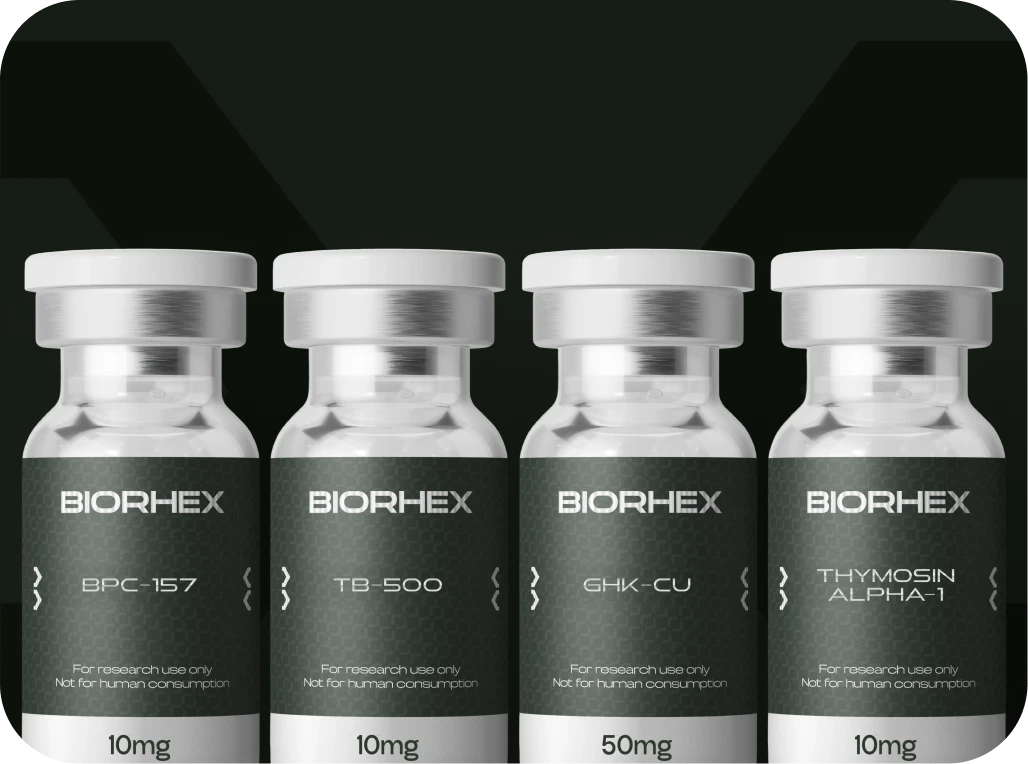
Tissue Regeneration Research Stack

$339.00

What Is Tissue Regeneration Research Stack

A multi-compound laboratory stack for investigating angiogenesis, extracellular-matrix remodeling, cell migration, inflammatory signaling, and immune-response pathways.

METABOLIC RESEARCH STACK

COMPONENT

BPC-157

TB-500

GHK-Cu

Thymosin Alpha-1 (TA1)

QUANTITY

10mg

10mg

50mg

10mg

RESEARCH CLASS

gastric peptide fragment and tissue-response research

thymosin beta-4 fragment research

copper-binding tripeptide research

thymic peptide and immune-signaling research

Compound Overview

The Tissue Regeneration Research Stack combines four research compounds associated with distinct aspects of tissue biology. BPC-157 is studied primarily in preclinical models involving vascular response, connective tissue, and gastrointestinal-derived signaling. TB-500 is a synthetic fragment associated with thymosin beta-4 research and actin-mediated cell migration. GHK-Cu is a copper-binding tripeptide examined in extracellular-matrix, fibroblast, and gene-expression models. Thymosin Alpha-1 is a 28-amino-acid thymic peptide used to study innate and adaptive immune signaling.
The stack is intended to support component-specific and comparative research. It does not establish that the compounds are compatible, synergistic, or suitable for administration.

Fibroblast activity and extracellular-matrix remodeling models
Cell migration, actin dynamics, and angiogenesis research
Connective-tissue and vascular-response pathway investigation
Copper-peptide signaling and collagen-associated gene-expression studies
Innate and adaptive immune-response pathway modeling

BACKGROUND & HISTORY

The compounds in this stack originate from separate lines of peptide research. GHK was isolated from human plasma and later characterized as a copper-binding signaling tripeptide. Thymosin beta-4 and thymosin alpha-1 were identified through thymic peptide research, although they act through different biological systems. BPC-157 was derived from research on a gastric protein fragment. Their grouping reflects broad laboratory interest in repair-associated signaling and immune regulation.

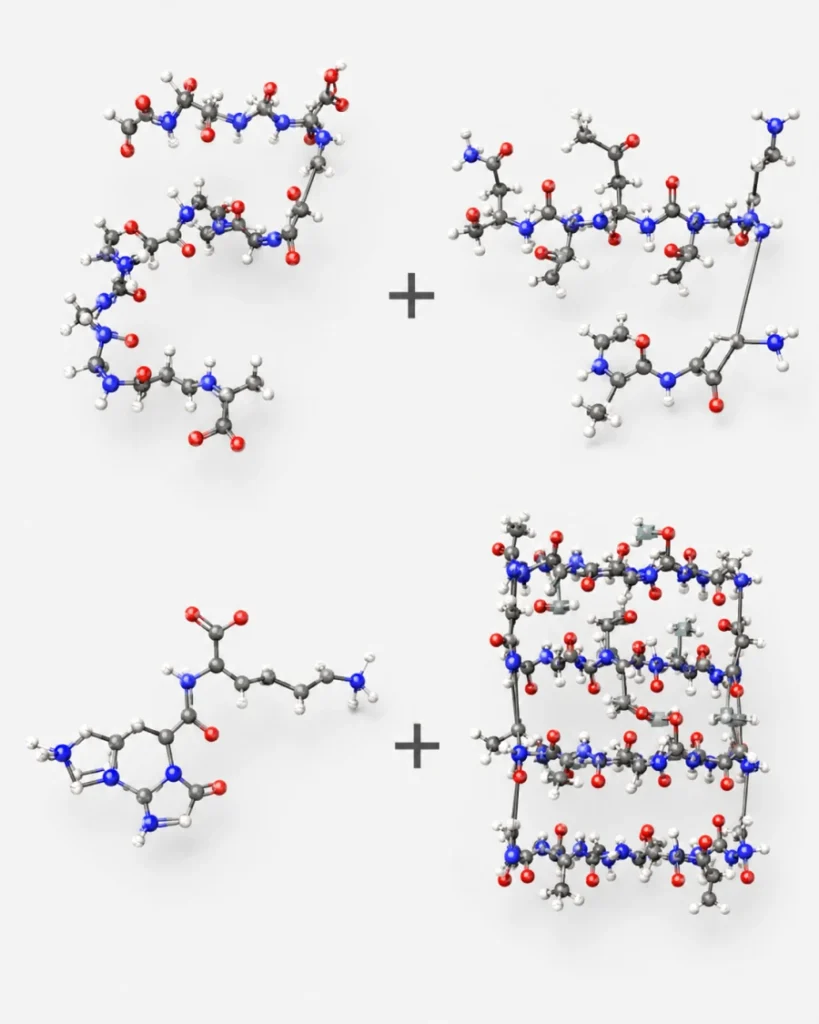
Structure

Reserch-grade coenzyme compound visualization.

COMPOUND

BPC-157 + TB-500 + GHK-Cu + Thymosin Alpha-1 (TA1)

TYPE

Multi-component tissue regeneration and extracellular matrix research stack

MOLECULAR FORMULA

Not applicable (multi-component formulation)

MOLECULAR WEIGHT

Not applicable (individual component molecular weights vary)

PURITY

≥99%

ANALYSIS

HPLC Verified

STORAGE

Store at -20°C. Protect from light and moisture.

CLASSIFICATION

Reserch Use Only

Research Findings

Published and preclinical research relevant to the individual components covers several areas of scientific investigation, including:

  • BPC-157 models: Preclinical research examines angiogenic signaling, nitric-oxide pathways, tendon and soft-tissue response, and vascular integrity.

  • Thymosin beta-4/TB-500 models: Studies investigate G-actin sequestration, cell migration, wound-response signaling, and tissue remodeling.

  • GHK-Cu models: Research evaluates copper transport, fibroblast activity, collagen-related expression, and extracellular-matrix signaling.

  • Thymosin Alpha-1 models: Laboratory work examines dendritic-cell, T-cell, cytokine, and innate immune-response pathways.

References

1. Sikiric P, et al. (2018). Stable gastric pentadecapeptide BPC 157 and wound healing. Frontiers in Pharmacology, 9, 1232. https://doi.org/10.3389/fphar.2018.01232

2. Goldstein AL, Hannappel E, Kleinman HK. (2012). Thymosin beta4: a multi-functional regenerative peptide. Basic properties and clinical applications. Expert Opinion on Biological Therapy, 12(1), 37–51. https://doi.org/10.1517/14712598.2012.634793

3. Pickart L, Margolina A. (2018). Regenerative and protective actions of the GHK-Cu peptide in the light of the new gene data. International Journal of Molecular Sciences, 19(7), 1987. https://doi.org/10.3390/ijms19071987

4. Li J, et al. (2010). Thymosin alpha 1: biological activities, applications and genetic engineering production. Peptides, 31(11), 2151–2158. https://doi.org/10.1016/j.peptides.2010.06.028

FAQ

What type of research is this stack used for?

Tissue Regeneration Research Stack is intended for controlled in vitro, analytical, and preclinical laboratory research involving the pathways described on this page. Experimental design should address each component independently.

All BioRhex compounds included in this stack are manufactured in a GMP-compliant facility located in the United States.

Each applicable batch undergoes third-party HPLC purity testing, mass spectrometry identity verification, and sterility testing. Batch-specific Certificates of Analysis are included or made available for the individual components.

No. A stack contains multiple independent compounds. Each component has its own molecular identity, batch number, test results, and Certificate of Analysis.

No. The compounds in this stack are not supplied for human or animal administration. They are provided exclusively for laboratory research purposes.

Research Use Only

All BioRhex compounds in the Tissue Regeneration Research Stack are supplied strictly for laboratory research purposes. Not for human or animal consumption, medical use, diagnostic use, or therapeutic application. The compounds are not represented as FDA-approved for the uses described on this page. Nothing in this document should be interpreted as health guidance, dosage guidance, or a recommendation for use outside controlled research settings.

RELATED PRODUCTS