
Body Recomp Research Stack
$469.00
- In stock
- COA-verified
- ≥99% purity.
- USA manufactured.
- In stock
- COA-verified
- ≥99% purity.
- USA manufactured.
- COA-verified
- In stock
- ≥99% purity.
- USA manufactured.
- In stock
- ≥99% purity.
- USA manufactured.
- In stock
- ≥99% purity.
- USA manufactured.
- In stock
- ≥99% purity.
- USA manufactured.
What Is Body Recomp Research Stack
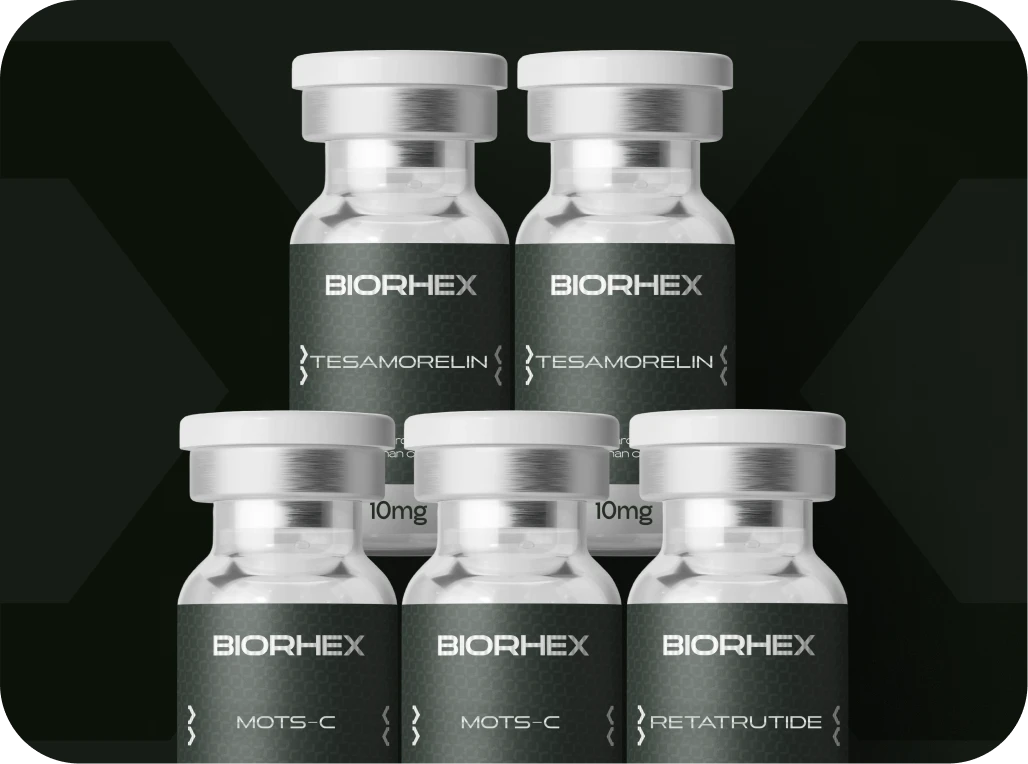
A coordinated research stack designed for laboratory investigation of incretin receptor signaling, GH-axis regulation, mitochondrial bioenergetics, and adipose-tissue pathway modeling.
METABOLIC RESEARCH STACK
COMPONENT
Retatrutide
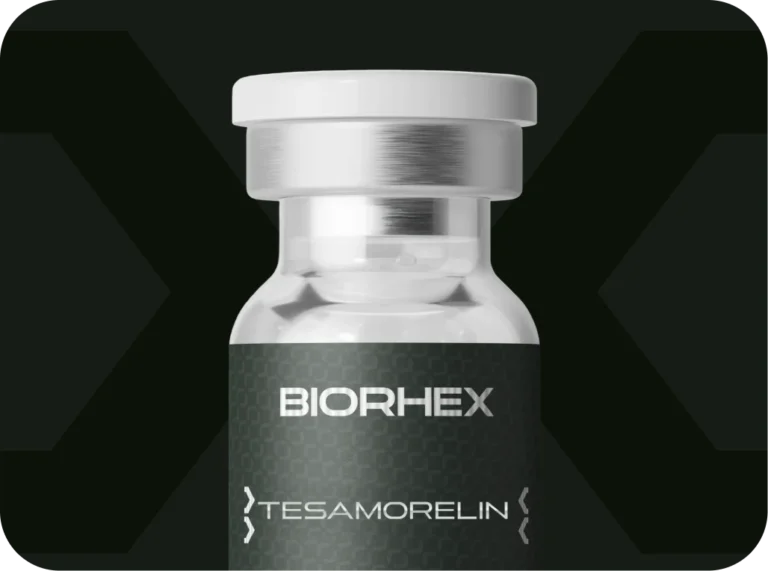
Tesamorelin
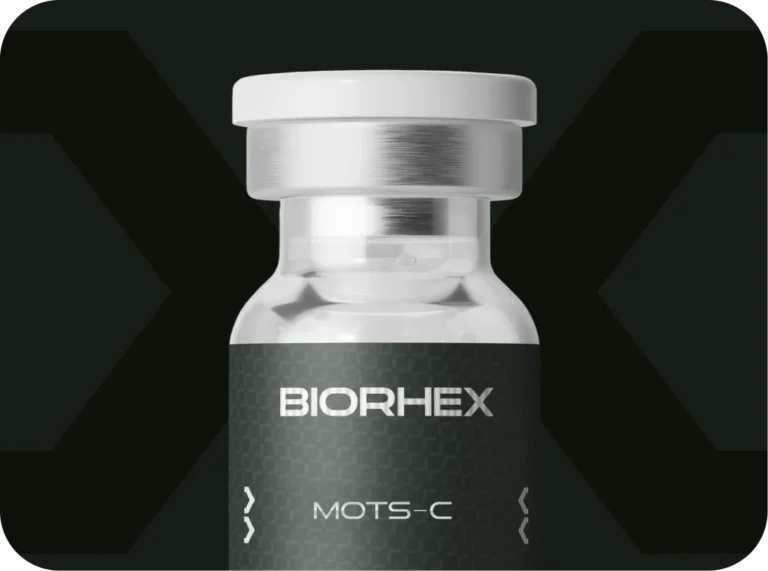
MOTS-c
QUANTITY
10mg
10mg × 2
10mg × 2
RESEARCH CLASS
triple GLP-1/GIP/glucagon receptor agonist research
GHRH-analog and GH-axis signaling research
mitochondrial-derived peptide and metabolic stress signaling research
Compound Overview
The Body Recomp Research Stack combines three distinct experimental compounds used to examine complementary metabolic pathways. Retatrutide is investigated as a triple receptor agonist with activity at GLP-1, GIP, and glucagon receptors. Tesamorelin is a growth hormone-releasing hormone analog used to study pulsatile GH signaling and downstream IGF-1 biology. MOTS-c is a mitochondria-derived peptide studied in cellular energy sensing, metabolic stress adaptation, and skeletal-muscle signaling.
Because this product is a multi-compound research stack, each component must be evaluated independently in controlled experimental designs. No combined pharmacologic effect, compatibility, or outcome is implied.
GLP-1, GIP, and glucagon receptor pathway modeling
Growth hormone-releasing hormone and downstream GH/IGF-1 signaling
Mitochondrial stress-response and AMPK-associated pathway research
Adipocyte, skeletal-muscle, and systemic energy-balance models
Cross-pathway experimental design involving endocrine and mitochondrial signaling
BACKGROUND & HISTORY
The component compounds emerged from separate research programs. Tesamorelin was developed from stabilized GHRH analog research. MOTS-c was identified as a mitochondrial-encoded signaling peptide involved in metabolic homeostasis. Retatrutide was developed as a single molecule capable of engaging three metabolically relevant receptors. Their inclusion in one stack reflects a laboratory interest in studying distinct but intersecting metabolic systems—not a validated combination therapy.
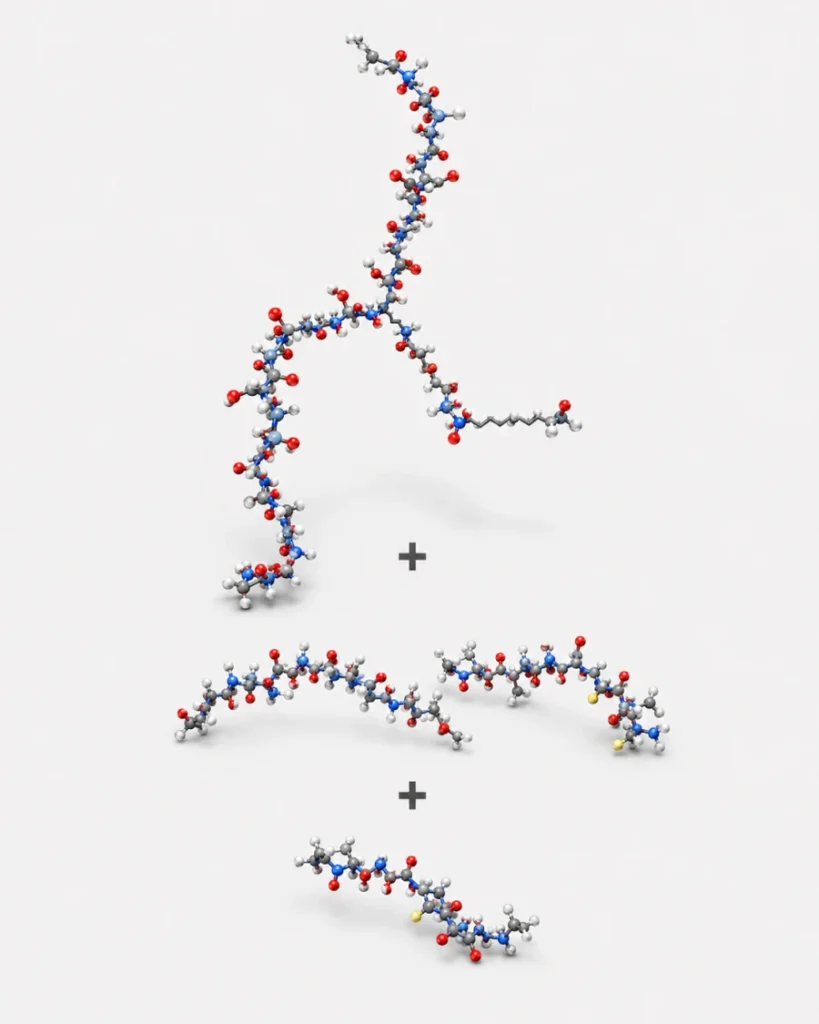
Structure
Reserch-grade coenzyme compound visualization.
COMPOUND
Retatrutide + Tesamorelin + MOTS-c
TYPE
Multi-component metabolic signaling and body composition research stack
MOLECULAR FORMULA
Not applicable (multi-component formulation)
MOLECULAR WEIGHT
Not applicable (individual component molecular weights vary)
PURITY
≥99%
ANALYSIS
HPLC Verified
STORAGE
Store at -20°C. Protect from light and moisture.
CLASSIFICATION
Reserch Use Only
Research Findings
Published and preclinical research relevant to the individual components covers several areas of scientific investigation, including:
Incretin and glucagon receptor signaling: Retatrutide research examines simultaneous activation of GLP-1, GIP, and glucagon receptors in metabolic models.
GH-axis research: Tesamorelin studies evaluate GHRH receptor activation, pulsatile GH release, and downstream endocrine signaling.
Mitochondrial peptide biology: MOTS-c research explores cellular stress adaptation, mitochondrial communication, and metabolic regulation.
Integrated pathway modeling: The stack supports separate or comparative experiments across receptor-mediated, endocrine, and mitochondrial pathways.
References
1. Jastreboff AM, et al. (2023). Triple-Hormone-Receptor Agonist Retatrutide for Obesity. New England Journal of Medicine, 389, 514–526. https://doi.org/10.1056/NEJMoa2301972
2. Stanley TL, et al. (2014). Effect of tesamorelin on visceral fat and liver fat in HIV-infected patients with abdominal fat accumulation. JAMA, 312(4), 380–389. https://doi.org/10.1001/jama.2014.8334
3. Lee C, et al. (2015). The mitochondrial-derived peptide MOTS-c promotes metabolic homeostasis and reduces obesity and insulin resistance. Cell Metabolism, 21(3), 443–454. https://doi.org/10.1016/j.cmet.2015.02.009
4. Kim KH, et al. (2018). The mitochondrial-encoded peptide MOTS-c translocates to the nucleus to regulate nuclear gene expression in response to metabolic stress. Cell Metabolism, 28(3), 516–524.e7. https://doi.org/10.1016/j.cmet.2018.06.008
FAQ
What type of research is this stack used for?
Body Recomp Research Stack is intended for controlled in vitro, analytical, and preclinical laboratory research involving the pathways described on this page. Experimental design should address each component independently.
Where is BioRhex’s Body Recomp Research Stack manufactured?
All BioRhex compounds included in this stack are manufactured in a GMP-compliant facility located in the United States.
What testing does BioRhex conduct on the included compounds?
Each applicable batch undergoes third-party HPLC purity testing, mass spectrometry identity verification, and sterility testing. Batch-specific Certificates of Analysis are included or made available for the individual components.
Does the stack have one molecular formula or one Certificate of Analysis?
No. A stack contains multiple independent compounds. Each component has its own molecular identity, batch number, test results, and Certificate of Analysis.
Is this stack approved for human use?
No. The compounds in this stack are not supplied for human or animal administration. They are provided exclusively for laboratory research purposes.
Research Use Only
All BioRhex compounds in the Body Recomp Research Stack are supplied strictly for laboratory research purposes. Not for human or animal consumption, medical use, diagnostic use, or therapeutic application. The compounds are not represented as FDA-approved for the uses described on this page. Nothing in this document should be interpreted as health guidance, dosage guidance, or a recommendation for use outside controlled research settings.