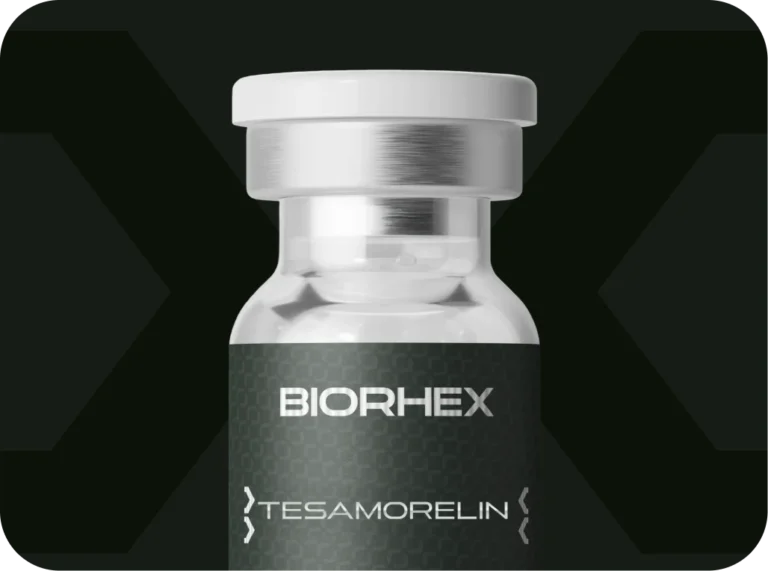

Tesamorelin

$89.00

What Is Tesamorelin?

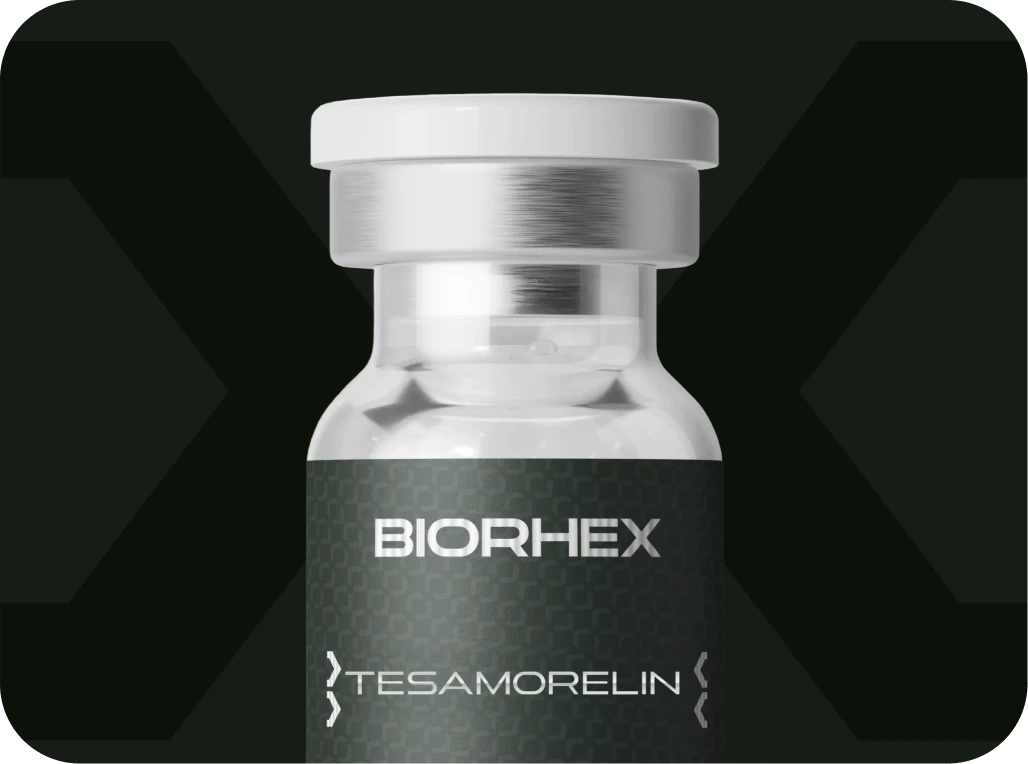
Tesamorelin is a synthetic analogue of growth hormone-releasing hormone (GHRH), comprising the full 44-amino-acid GHRH sequence modified with a trans-3-hexenoic acid conjugation to improve metabolic stability. In research settings, Tesamorelin is studied for its interactions with pituitary GHRH receptors, growth hormone secretion dynamics, and downstream IGF-1 axis signaling.

BioRhex supplies Tesamorelin as a research compound manufactured in a GMP-compliant US facility, tested to ≥99% purity via HPLC and mass spectrometry, and supplied strictly for controlled laboratory research — not for human or animal use.

Compound Overview

Tesamorelin is a stabilized GHRH analogue studied for its hypothalamic-pituitary GH axis interactions. Preclinical and in vitro research models examine how Tesamorelin may influence:

• GHRH receptor binding and pituitary somatotroph activation
• Pulsatile GH secretion pattern modeling
• IGF-1 axis downstream signaling dynamics
• Lipid metabolic pathway interactions in experimental models
• GH axis pharmacology relative to native GHRH
All findings referenced are from controlled research environments and do not represent clinical outcomes or therapeutic claims.

History of Tesamorelin

Tesamorelin was developed as a stabilized GHRH analogue to address the short half-life of native GHRH in biological systems. The trans-3-hexenoic acid modification significantly increases resistance to dipeptidyl peptidase degradation, extending the compound’s useful activity window in research models.

Research into Tesamorelin’s GH axis interactions established it as a useful tool for studying GHRH receptor pharmacology and pituitary somatotroph biology in controlled experimental settings.

Tesamorelin remains an active reference compound in GH axis research, with interest expanding into its downstream metabolic signaling interactions in preclinical models.

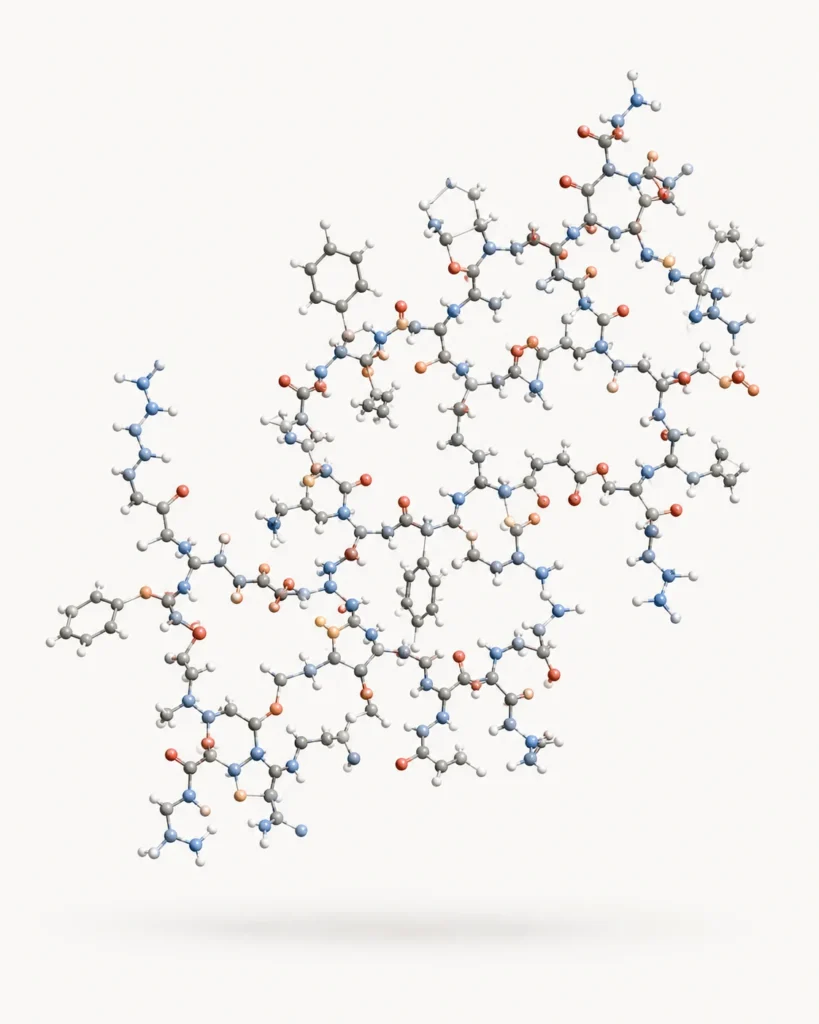
Structure

Reserch-grade coenzyme compound visualization.

COMPOUND

C6H9O-Tyr-Ala-Asp-Ala-Ile-Phe-Thr-Asn-Ser-Tyr-Arg-Lys-Leu-Gly-Gln-Leu-Ser-Ala-Arg-Lys-Leu-Leu-Gln-Asp-Ile-Met-Ser-Arg-Gln-Gln-Gly-Glu-Ser-Asn-Gln-Glu-Arg-Gly-Ala-Arg-Ala-Arg-Leu-NH₂

TYPE

GHRH analog

MOLECULAR FORMULA

C₂₂₁H₃₆₆N₇₂O₆₇S

MOLECULAR WEIGHT

5135.78 g/mol

PURITY

≥99%

ANALYSIS

HPLC Verified

STORAGE

Store at -20°C. Protect from light and moisture.

CLASSIFICATION

Reserch Use Only

Research Findings

Published and preclinical research on Tesamorelin covers several areas of scientific investigation, including:

  • GHRH receptor pharmacology: Studies examine Tesamorelin’s receptor binding kinetics and downstream cAMP signaling in pituitary somatotroph cell models.

  • GH secretion dynamics: Research investigates pulsatile GH release patterns associated with GHRH receptor activation in experimental systems.

  • IGF-1 axis research: Laboratory models evaluate downstream IGF-1 production and signaling in response to Tesamorelin-induced GH axis modulation.

  • Metabolic pathway interaction: Studies explore connections between GH axis activity and lipid metabolic signaling in preclinical environments.

All findings referenced are from controlled, non-clinical research models and do not imply therapeutic or clinical application.

References

1. Falutz J, Allas S, Blot K, et al. (2007). Metabolic Effects of a Growth Hormone-Releasing Factor in Patients with HIV. New England Journal of Medicine, 357(23), 2359–2370. https://doi.org/10.1056/NEJMoa072375

2. Falutz J, Mamputu JC, Potvin D, et al. (2010). Effects of tesamorelin (TH9507), a growth hormone-releasing factor analog, in HIV-infected patients with abdominal fat accumulation. Journal of Clinical Endocrinology & Metabolism, 95(9), 4291–4304. https://doi.org/10.1210/jc.2010-0490

3. Stanley TL, Feldpausch MN, Oh J, et al. (2014). Effect of tesamorelin on visceral fat and liver fat in HIV-infected patients. JAMA, 312(4), 380–389. https://doi.org/10.1001/jama.2014.8334

4. Baker LD, Barsness SM, Borson S, et al. (2012). Effects of growth hormone-releasing hormone on cognitive function in adults with mild cognitive impairment. Archives of Neurology, 69(11), 1420–1429. https://doi.org/10.1001/archneurol.2012.1970

FAQ

What type of research is Tesamorelin used for?

Tesamorelin is used in laboratory research settings. All supplied compounds are intended strictly for in vitro and preclinical research purposes. Use is limited to controlled scientific environments.

All BioRhex compounds, including Tesamorelin, are manufactured in a GMP-compliant facility located in the United States.

Every batch of Tesamorelin undergoes third-party HPLC purity testing, mass spectrometry identity verification, and sterility testing. A Certificate of Analysis is included with every order, documenting batch-specific purity data at a ≥99% threshold.

No. Tesamorelin is not FDA-approved and is not intended for human or animal administration. It is supplied exclusively for laboratory research purposes.

Only qualified personnel in controlled laboratory settings following appropriate safety and handling protocols.

Research Use Only

All BioRhex compounds are supplied strictly for laboratory research purposes. Not for human or animal consumption, medical use, or therapeutic application. Tesamorelin is not FDA-approved for any medical purpose. Nothing on this page should be interpreted as health guidance or applied outside controlled research settings.

RELATED PRODUCTS