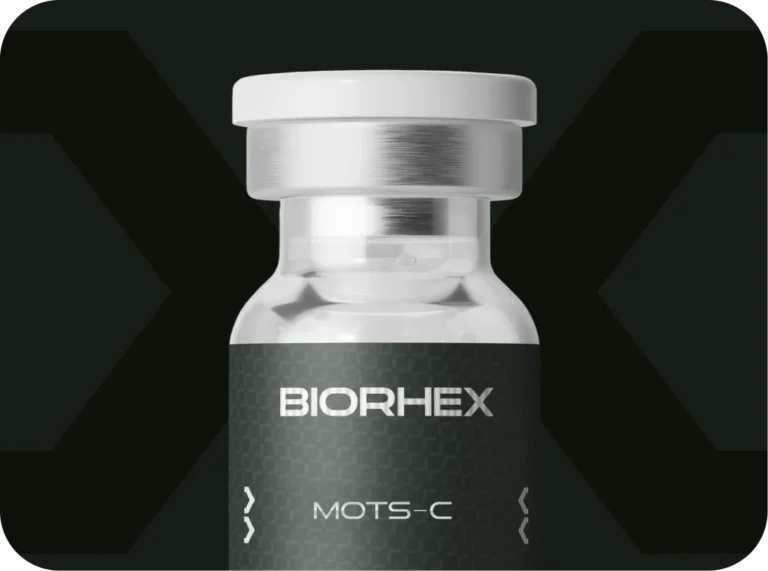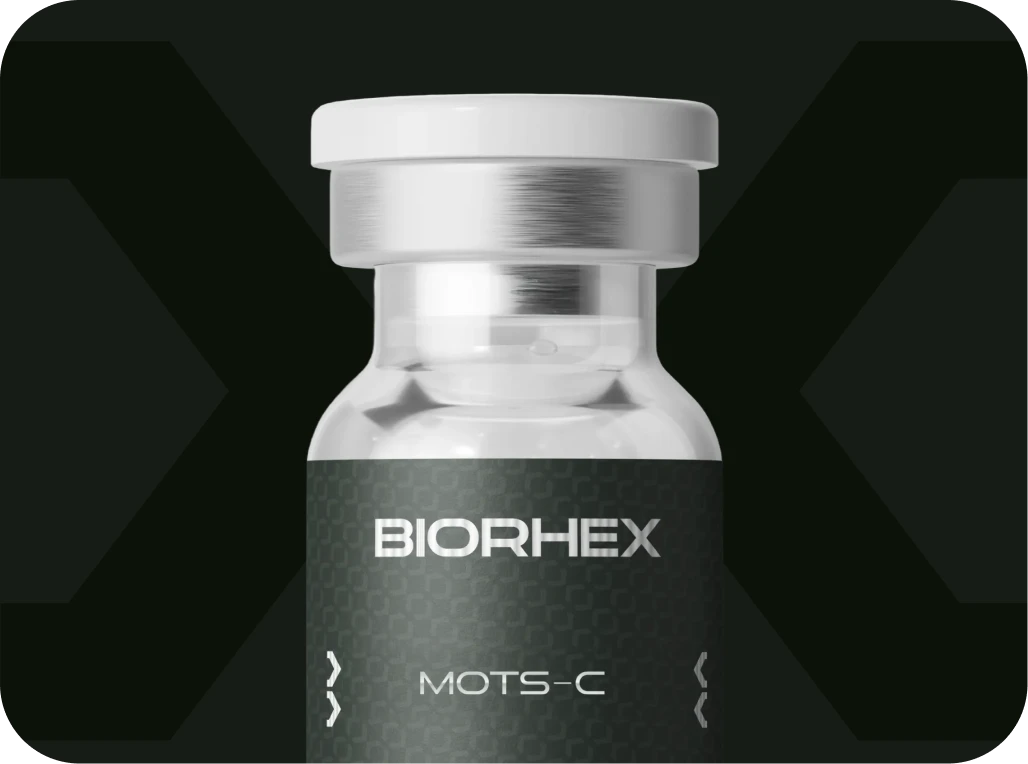
MOTS-C (10mg)
$69.99
MOTS-C (Mitochondrial Open Reading Frame of the 12S rRNA-c) is a 16-amino-acid peptide encoded within mitochondrial DNA, specifically within the 12S ribosomal RNA gene. In research settings, MOTS-C is studied for its role in AMPK pathway activation, insulin signaling interactions, and mitochondrial-nuclear communication dynamics.
BioRhex supplies MOTS-C as a research compound manufactured in a GMP-compliant US facility, tested to ≥99% purity via HPLC and mass spectrometry, and supplied strictly for controlled laboratory research — not for human or animal use.
- In stock
- COA-verified
- ≥99% purity.
- USA manufactured.
- In stock
- COA-verified
- ≥99% purity.
- USA manufactured.
- COA-verified
- In stock
- ≥99% purity.
- USA manufactured.
What Is MOTS-C?
MOTS-C (Mitochondrial Open Reading Frame of the 12S rRNA-c) is a 16-amino-acid peptide encoded within mitochondrial DNA, specifically within the 12S ribosomal RNA gene. In research settings, MOTS-C is studied for its role in AMPK pathway activation, insulin signaling interactions, and mitochondrial-nuclear communication dynamics.
BioRhex supplies MOTS-C as a research compound manufactured in a GMP-compliant US facility, tested to ≥99% purity via HPLC and mass spectrometry, and supplied strictly for controlled laboratory research — not for human or animal use.
Compound Overview
MOTS-C is a mitochondria-encoded peptide studied as a regulator of metabolic signaling. In vitro and preclinical research models examine how MOTS-C may influence:
• AMPK pathway activation and cellular energy sensing mechanisms
• Insulin signaling pathway interactions and glucose uptake pathway modeling
• Folate cycle and methionine metabolism interactions
• Mitochondrial-to-nuclear signaling communication
• Skeletal muscle metabolic pathway activity in preclinical research systems
All findings referenced are from controlled research environments and do not represent clinical outcomes or therapeutic claims.
History of MOTS-C
MOTS-C was identified by Cohen and colleagues in 2015 as a biologically active peptide encoded within the mitochondrial genome — a significant finding that expanded understanding of mitochondria as active endocrine-like signaling organelles beyond their classical bioenergetic role.
Research identified MOTS-C as a mitokine capable of translocating to the nucleus under metabolic stress conditions, where it interacts with gene regulatory networks associated with metabolic homeostasis.
It has since become a focus of metabolic research — particularly in AMPK signaling, aging-associated metabolic pathway dysregulation, and cellular energy homeostasis modeling in laboratory settings.
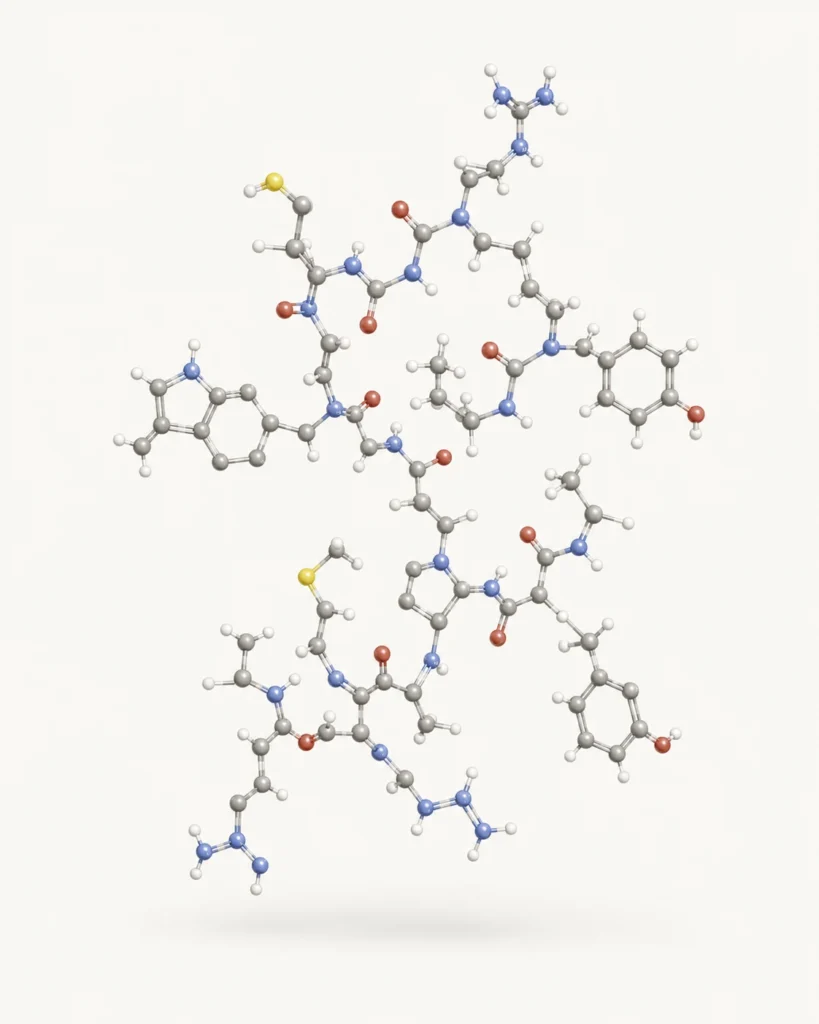
Molecular Structure
Met-Arg-Trp-Gln-Glu-Met-Gly-Gly-His-Leu-Phe-Val-Val-Asn-Pro-Glu
Research Findings
Published and preclinical research on MOTS-C covers several areas of scientific investigation, including:
AMPK signaling research: Studies examine how MOTS-C activates AMPK and associated energy-sensing mechanisms in cellular models.
Insulin pathway modeling: Research investigates MOTS-C interactions with insulin receptor signaling and glucose transporter activity in preclinical systems.
Mitochondrial-nuclear crosstalk: Laboratory findings explore MOTS-C’s translocation dynamics and interactions with metabolic gene regulatory networks.
Aging and metabolic research: Studies evaluate MOTS-C’s role in age-associated metabolic signaling pathway changes in experimental models.
All findings referenced are from controlled, non-clinical research models and do not imply therapeutic or clinical application.
References
FAQ
What type of research is MOTS-C used for?
MOTS-C is used in laboratory research settings. All supplied compounds are intended strictly for in vitro and preclinical research purposes. Use is limited to controlled scientific environments.
Where is BioRhex’s MOTS-C manufactured?
All BioRhex compounds, including MOTS-C, are manufactured in a GMP-compliant facility located in the United States.
What testing does BioRhex conduct on MOTS-C?
Every batch of MOTS-C undergoes third-party HPLC purity testing, mass spectrometry identity verification, and sterility testing. A Certificate of Analysis is included with every order, documenting batch-specific purity data at a ≥99% threshold.
Is MOTS-C approved for human use?
No. MOTS-C is not FDA-approved and is not intended for human or animal administration. It is supplied exclusively for laboratory research purposes.
Who should handle this compound?
Only qualified personnel in controlled laboratory settings following appropriate safety and handling protocols.
Research Use Only
All BioRhex compounds are supplied strictly for laboratory research purposes. Not for human or animal consumption, medical use, or therapeutic application. MOTS-C is not FDA-approved for any medical purpose. Nothing on this page should be interpreted as health guidance or applied outside controlled research settings.