




AOD9604 (5mg)
AOD9604 is a synthetic peptide fragment derived from the C-terminal region of human growth hormone (hGH 177-191), with an additional tyrosine residue at the N-terminus. In research settings, AOD9604 is examined for its interactions with adipocyte signaling pathways and lipolytic mechanisms — studied independently of the growth-promoting effects associated with full-length GH.
BioRhex supplies AOD9604 as a research compound manufactured in a GMP-compliant US facility, tested to ≥99% purity via HPLC and mass spectrometry, and supplied strictly for controlled laboratory research — not for human or animal use.
BPC-157
BPC-157 (Body Protection Compound-157) is a synthetic 15-amino-acid peptide derived from a partial sequence of a naturally occurring gastric protection protein found in human gastric juice. In research settings, BPC-157 is examined for its interactions with angiogenic pathways, cellular repair signaling, and inflammatory mediator modulation in laboratory models.
BioRhex supplies BPC-157 (5mg) as a research compound manufactured in a GMP-compliant US facility, tested to ≥99% purity via HPLC and mass spectrometry, and supplied strictly for controlled laboratory research — not for human or animal use.
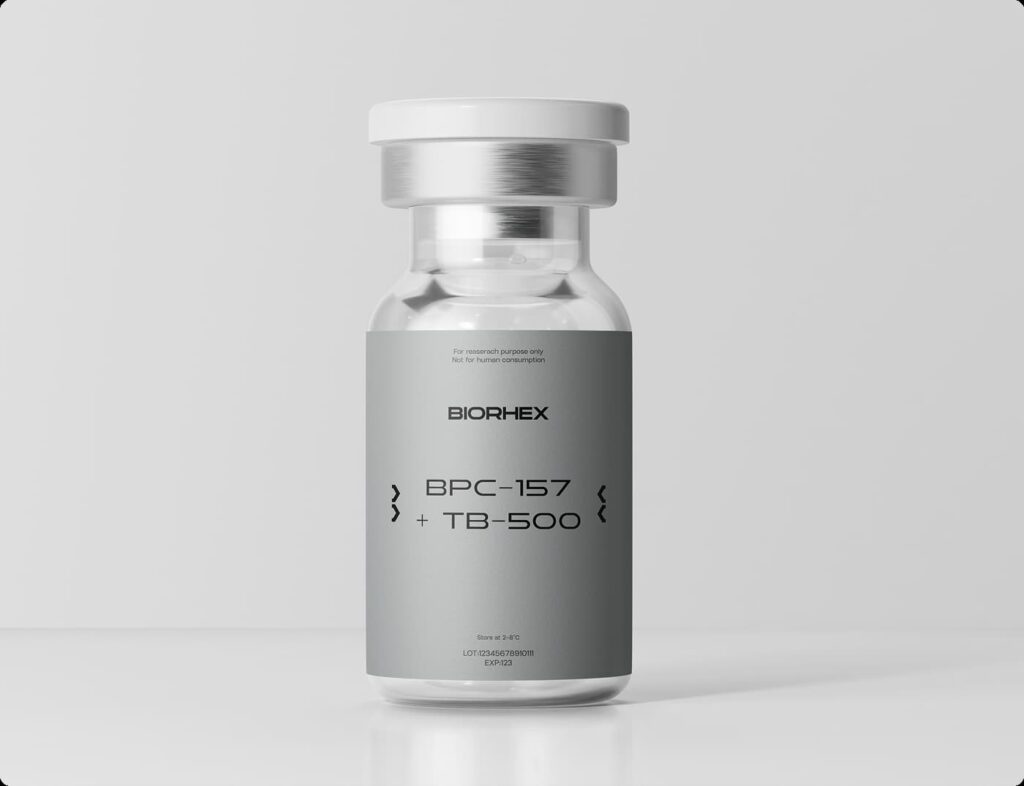
BPC-157 + TB-500
BPC-157 + TB-500 is a research-grade blend combining two complementary tissue signaling peptides: BPC-157, a 15-amino-acid gastric-derived peptide, and TB-500, the active fragment of Thymosin Beta-4. In research settings, this combination is studied for its dual-pathway interactions across angiogenesis signaling, actin biology, cellular migration dynamics, and tissue repair mechanisms.
BioRhex supplies BPC-157 + TB-500 (20mg) as a research compound manufactured in a GMP-compliant US facility, tested to ≥99% purity via HPLC and mass spectrometry, and supplied strictly for controlled laboratory research — not for human or animal use.
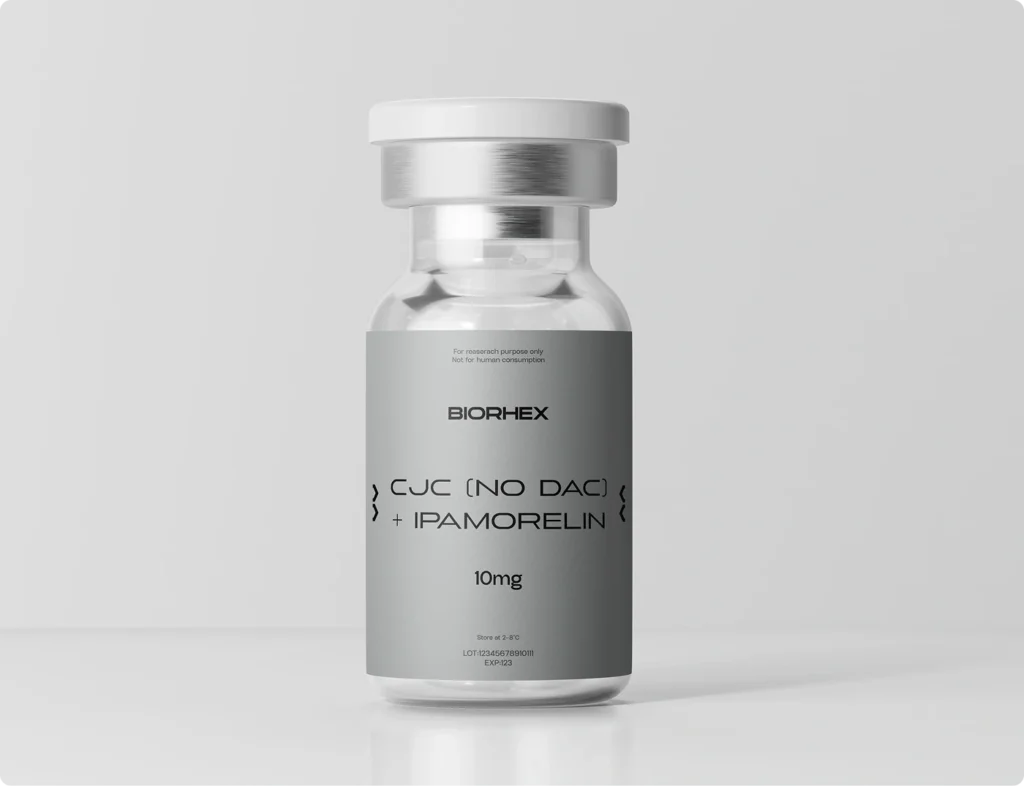
CJC (no DAC) + Ipamorelin (10mg)
CJC (no DAC) + Ipamorelin is a research-grade blend combining two complementary GH axis peptides. CJC-1295 without Drug Affinity Complex is a GHRH analogue engaging the hypothalamic-pituitary axis at the GHRH receptor level. Ipamorelin is a selective GHSR-1a agonist engaging the ghrelin receptor pathway. In research settings, this combination is studied for its dual-mechanism GH axis engagement and associated downstream signaling.
BioRhex supplies CJC (no DAC) + Ipamorelin as a research compound manufactured in a GMP-compliant US facility, tested to ≥99% purity via HPLC and mass spectrometry, and supplied strictly for controlled laboratory research — not for human or animal use.
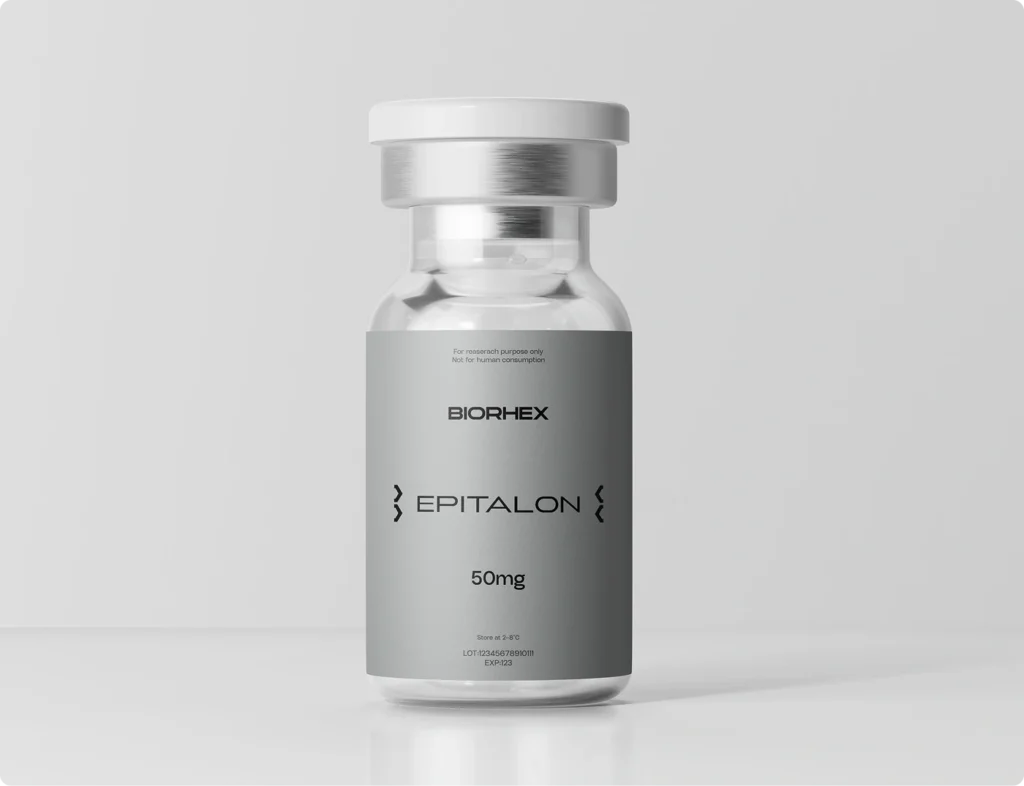
Epitalon (50mg)
Epitalon (Epithalon) is a synthetic tetrapeptide analogue of Epithalamin, a naturally occurring peptide isolated from bovine pineal gland tissue. In research settings, Epitalon is studied for its interactions with telomerase enzyme activity, telomere length regulation, and cellular aging pathway models.
BioRhex supplies Epitalon as a research compound manufactured in a GMP-compliant US facility, tested to ≥99% purity via HPLC and mass spectrometry, and supplied strictly for controlled laboratory research — not for human or animal use.