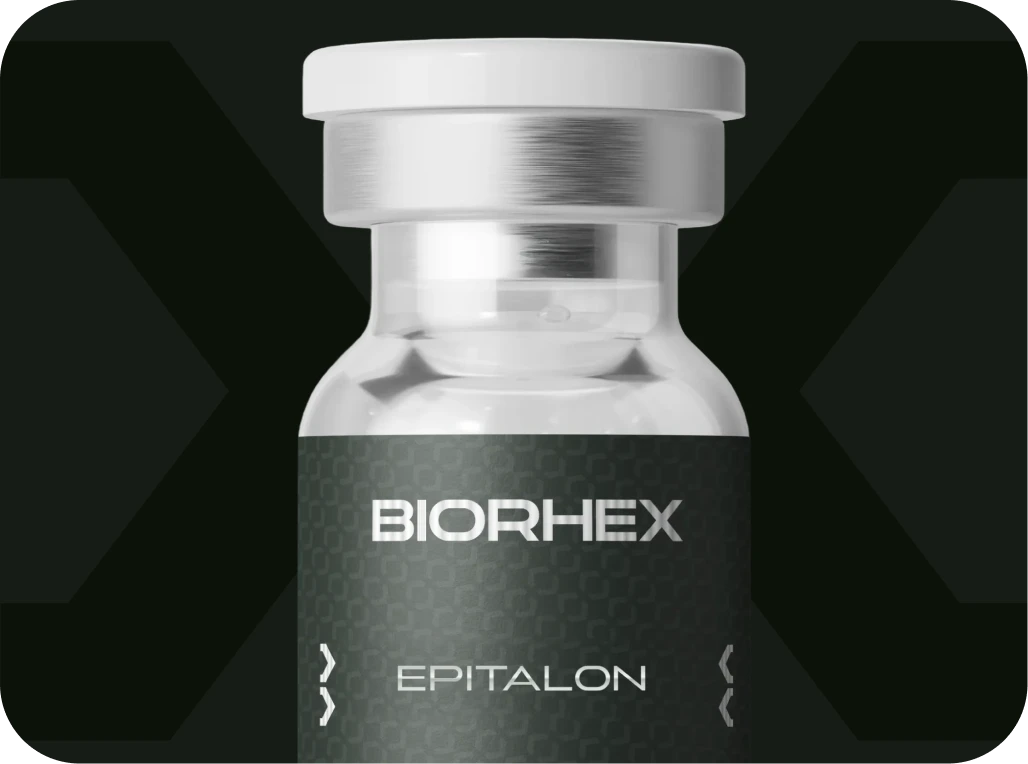

Epitalon
$99.00
- In stock
- COA-verified
- ≥99% purity.
- USA manufactured.
- In stock
- COA-verified
- ≥99% purity.
- USA manufactured.
- COA-verified
- In stock
- ≥99% purity.
- USA manufactured.
- In stock
- ≥99% purity.
- USA manufactured.
- In stock
- ≥99% purity.
- USA manufactured.
- In stock
- ≥99% purity.
- USA manufactured.
What Is Epitalon?
Epitalon (Epithalon) is a synthetic tetrapeptide analogue of Epithalamin, a naturally occurring peptide isolated from bovine pineal gland tissue. In research settings, Epitalon is studied for its interactions with telomerase enzyme activity, telomere length regulation, and cellular aging pathway models.
BioRhex supplies Epitalon as a research compound manufactured in a GMP-compliant US facility, tested to ≥99% purity via HPLC and mass spectrometry, and supplied strictly for controlled laboratory research — not for human or animal use.
Compound Overview
Epitalon is a tetrapeptide investigated for its interactions with telomere-associated and epigenetic signaling pathways. In vitro and preclinical models examine how Epitalon may influence:
• Telomerase enzyme activation and telomere length dynamics in cellular models
• Epigenetic modification pathways related to gene expression regulation
• Pineal-associated neuroendocrine signaling research
• Cellular senescence markers in aging pathway models
• Antioxidant enzyme expression and oxidative stress response signaling
All findings referenced are from controlled research environments and do not represent clinical outcomes or therapeutic claims.
History of Epitalon
Epitalon was developed by Vladimir Khavinson at the St. Petersburg Institute of Bioregulation and Gerontology as a synthetic tetrapeptide analogue of naturally occurring pineal-derived bioregulatory peptides. Research into its biological activity began in the 1980s.
In vitro and preclinical findings related to Epitalon’s interactions with telomerase activity and neuroendocrine regulation expanded its use as a research tool in longevity biology and cellular aging pathway studies.
Epitalon continues to be investigated within cellular aging and longevity pathway research in controlled laboratory environments.
Structure
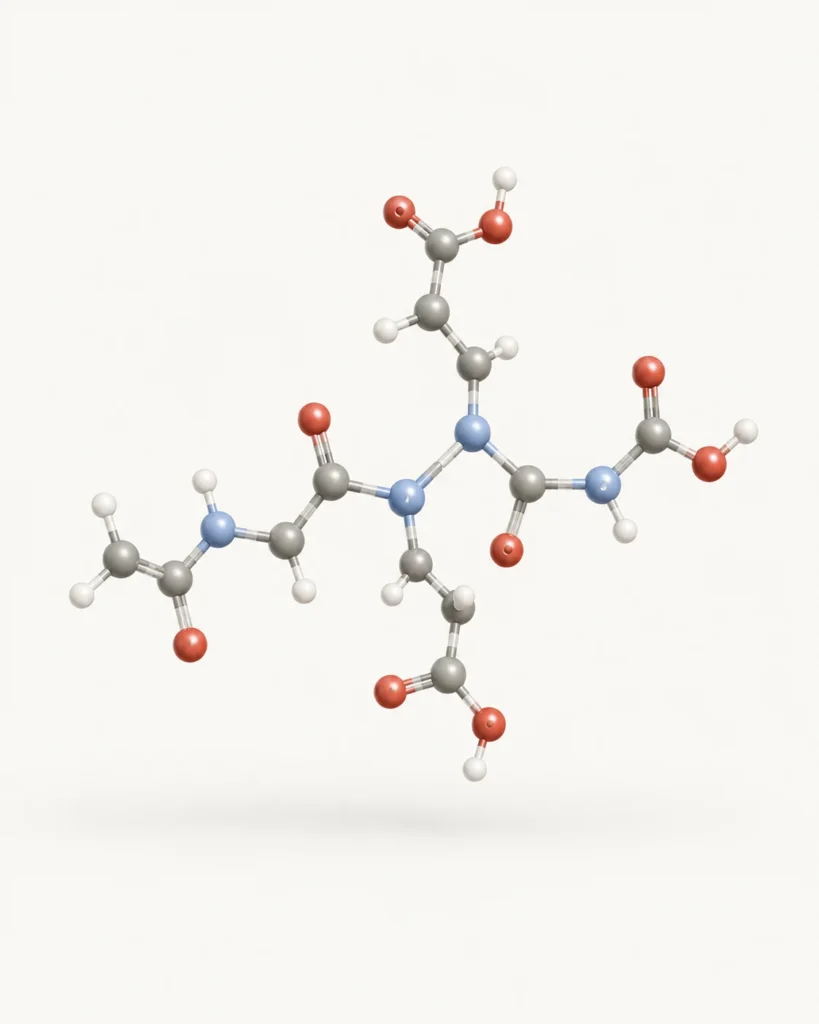
Reserch-grade coenzyme compound visualization.
COMPOUND
Ala-Glu-Asp-Gly
TYPE
Tetrapeptide (AEDG) bioregulator
MOLECULAR FORMULA
C₁₄H₂₂N₄O₉
MOLECULAR WEIGHT
390.35 g/mol
PURITY
≥99%
ANALYSIS
HPLC Verified
STORAGE
Store at -20°C. Protect from light and moisture.
CLASSIFICATION
Reserch Use Only
Research Findings
Published and preclinical research on Epitalon covers several areas of scientific investigation, including:
Telomere biology research: Studies examine Epitalon’s interactions with telomerase expression and telomere length maintenance in cellular aging models.
Epigenetic pathway modeling: Research explores Epitalon’s effects on histone modification and chromatin remodeling in experimental aging systems.
Neuroendocrine signaling research: Laboratory models investigate interactions between Epitalon and pineal-associated regulatory pathway activity.
Cellular senescence research: Studies evaluate Epitalon’s effects on senescence-associated secretory phenotype (SASP) markers in preclinical models.
All findings referenced are from controlled, non-clinical research models and do not imply therapeutic or clinical application.
References
1. Khavinson VKh, Bondarev IE, Butyugov AA. (2003). Epithalon peptide induces telomerase activity and telomere elongation in human somatic cells. Bulletin of Experimental Biology and Medicine, 135(6), 590–592. https://doi.org/10.1023/A:1025493705728
2. Khavinson VKh, Izmaylov DM, Obukhova LK, Malinin VV. (2000). Effect of epitalon on the lifespan increase in Drosophila melanogaster. Mechanisms of Ageing and Development, 120(1–3), 141–149. https://doi.org/10.1016/S0047-6374(00)00217-7
3. Anisimov VN, Khavinson VKh, Provinciali M, et al. (2002). Inhibitory effect of the peptide epitalon on the development of spontaneous mammary tumors in HER-2/neu transgenic mice. International Journal of Cancer, 101(1), 7–10. https://doi.org/10.1002/ijc.10570
4. Araj H, Tumbar T, et al. (2025). Epitalon increases telomere length in human cell lines through telomerase upregulation or ALT activity. Biogerontology, 26, 315. https://doi.org/10.1007/s10522-025-10315-x
FAQ
What type of research is Epitalon used for?
Epitalon is used in laboratory research settings. All supplied compounds are intended strictly for in vitro and preclinical research purposes. Use is limited to controlled scientific environments.
Where is BioRhex’s Epitalon manufactured?
All BioRhex compounds, including Epitalon, are manufactured in a GMP-compliant facility located in the United States.
What testing does BioRhex conduct on Epitalon?
Every batch of Epitalon undergoes third-party HPLC purity testing, mass spectrometry identity verification, and sterility testing. A Certificate of Analysis is included with every order, documenting batch-specific purity data at a ≥99% threshold.
Is Epitalon approved for human use?
No. Epitalon is not FDA-approved and is not intended for human or animal administration. It is supplied exclusively for laboratory research purposes.
Who should handle this compound?
Only qualified personnel in controlled laboratory settings following appropriate safety and handling protocols.
Research Use Only
All BioRhex compounds are supplied strictly for laboratory research purposes. Not for human or animal consumption, medical use, or therapeutic application. Epitalon is not FDA-approved for any medical purpose. Nothing on this page should be interpreted as health guidance or applied outside controlled research settings.